
Are you grieving? No?
Do you have a symptom that’s worrying you? Are you dealing with an illness that’s interfering with your life? Are you facing a test or a procedure the may be good news, or terribly bad?
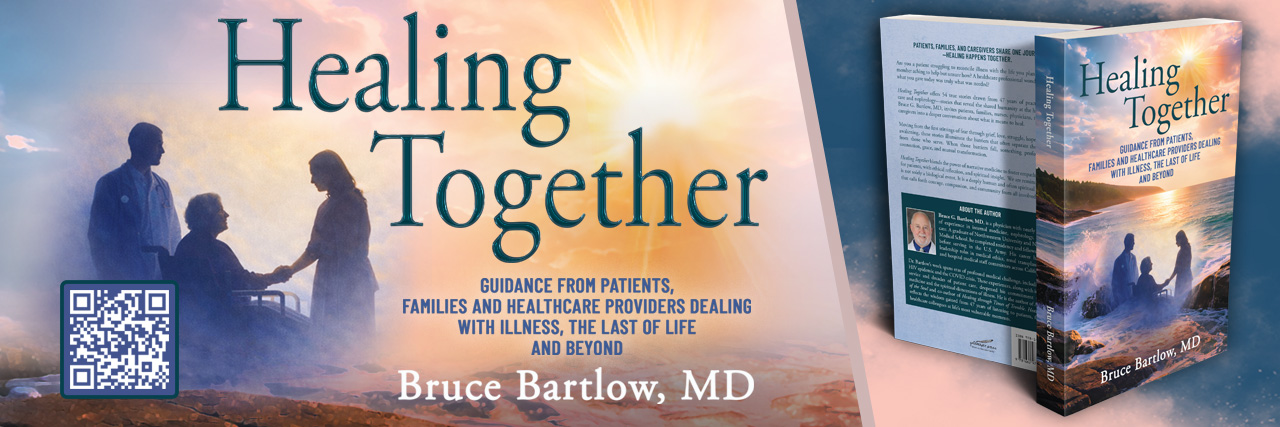
If so, believe it or not, you’re grieving. And why is that part of my new book, “Healing Together”? This 3-part blog about grieving will try to answer that question.
Finishing up my first book about end-of-life issues, “Medical Care of the Soul (2000),” I never used the word “grieving” until I happened upon Bill Maher’s TV programs about living the last of life. Grieving? What in the world is that? I asked myself. Must be something that happens after I leave the room. I don’t remember any course on that in medical school, nor any mention during residency or fellowship. When a patient died, we sometimes came together as a team to review what could have been done better, and what we regretted. The term “grieving” never came up.
When does grieving begin? Why is it kept so secret from patients and families and – most tragically – healthcare providers?
Around 1980, El Camino Hospital in Mountain View put on a presentation about the ICU experience. The 3 invited “patients” who’d spent at least 3 months in ICU to recount their experiences. Most of the medical, nursing and auxiliary staff attended, it seemed like 200 souls. We were excited to receive these patients’ thanks for saving them.
Alas, all 3 thanked us for our efforts, but two of three said they could never forgive us for what we’d put them through. What? Good grief, all the effort, heart and soul we’d put into saving them, and this was our thanks? Crestfallen, the nursing department arranged a series of group meetings to deal with their hurt. We doctors stomped off to our offices and never again mentioned the subject. There was no “good grief” to be had, because we denied we’d been dealt a blow that would need tending.
Looking back, I realize what the subject really was: these patients were grieving for what they’d suffered and the capabilities they’d lost. I believe we healthcare providers were grieving for what we hadn’t been able to cure, the gratitude we’d failed to win, and our own individual wounds that had drawn us into the healing professions. Three books and 45 years of medical practice later, I contend that we are failing ourselves and our patients by denying our need to grieve.
Leave a Reply